|
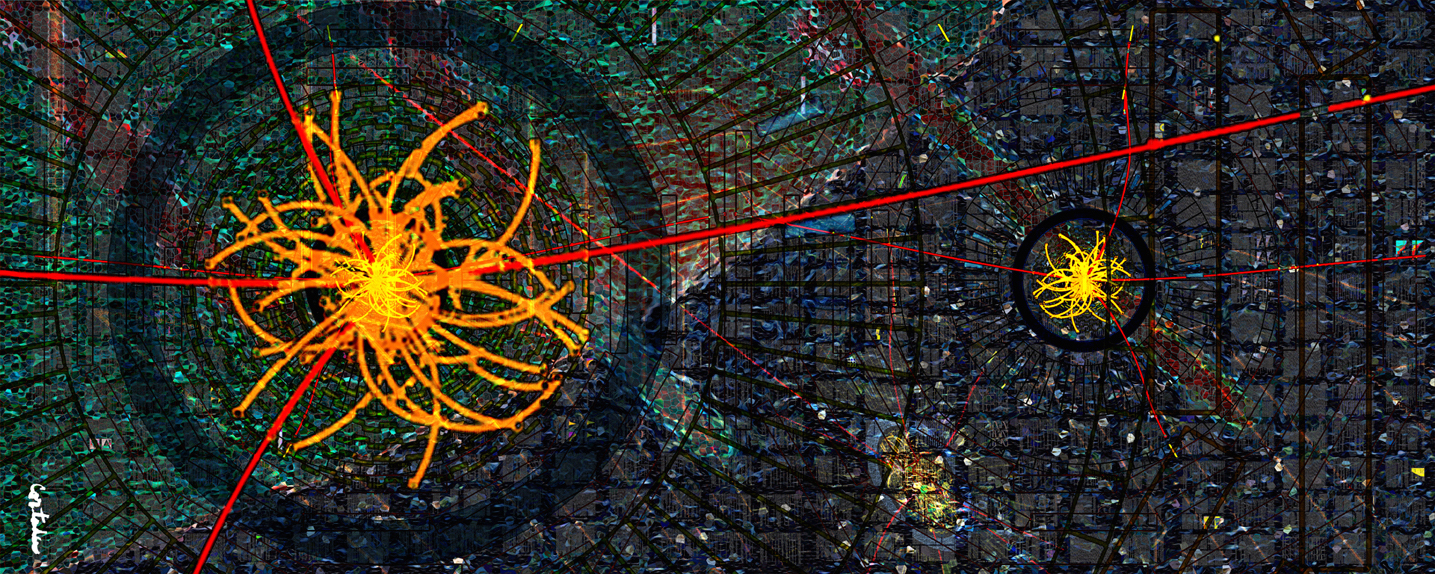
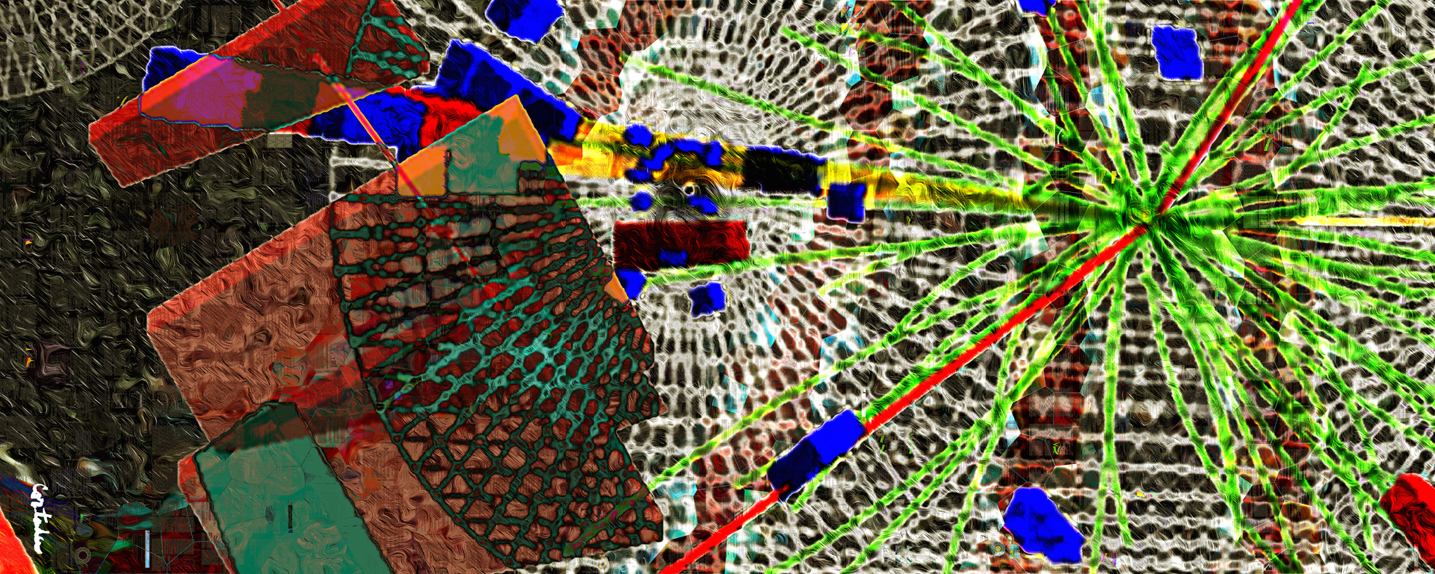
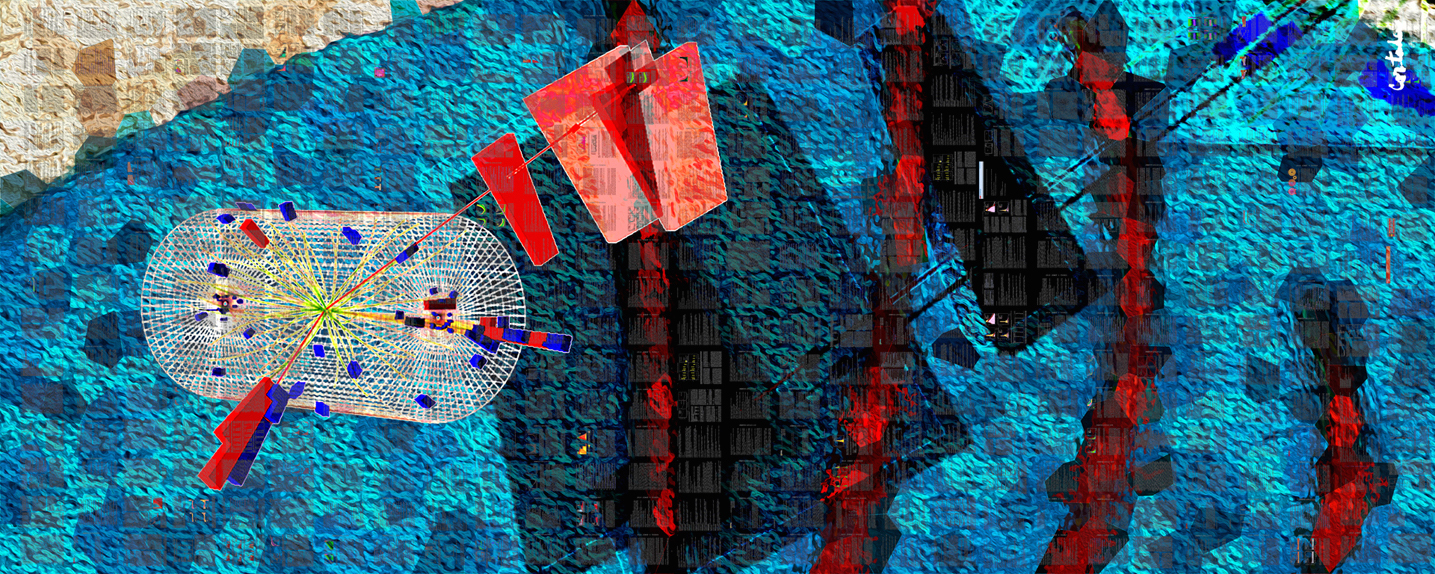
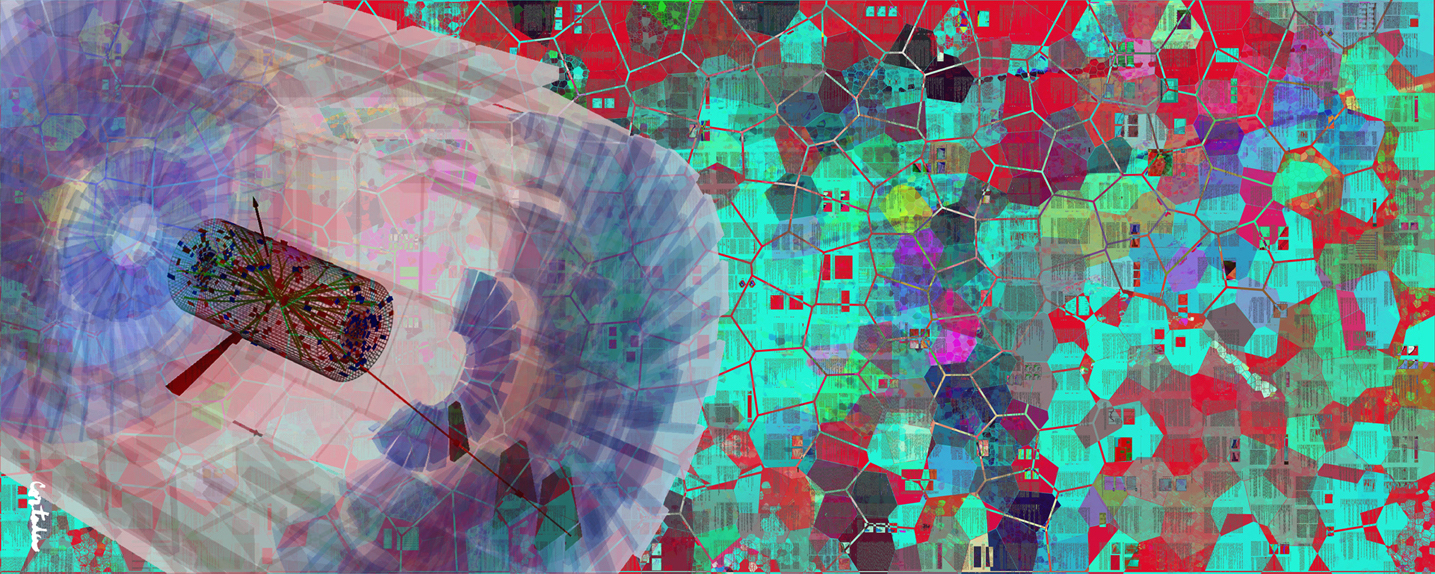
Entanglement is an intrinsic property of quantum mechanics and its measurement utilizes elementary particles to test quantum mechanics. Recently, the ATLAS Collaboration reported the first observation of entanglement in the top quark-antiquark ($ \mathrm{t} \bar{\mathrm{t}} $) system [21] wih a result indicating slight deviation from MC simulation. The measurement of the entanglement of $ \mathrm{t} \bar{\mathrm{t}} $ pairs performed with CMS data exploits the spin correlation variable $ D $, which at the $ \mathrm{t} \bar{\mathrm{t}} $ production threshold, and in absence of BSM contributions, provides access to the full spin correlation information. This result contrasts with the ATLAS Collaboration's findings in several key ways. We directly measure entanglement at the parton level, whereas ATLAS reports their observable at the particle level. Additionally, our analysis is the first to consider non-relativistic bound-state effects in the production threshold by including the ground state of toponium, $\eta$t, which were not included in the ATLAS result. Unlike ATLAS, the CMS result is derived from a binned likelihood fit to extract the entanglement proxy, rather than using a calibration curve. The $ D $ variable represents an entanglement proxy, where less than $ -1/ $ 3 signals the presence of entanglement. This proxy is measured using events containing two oppositely charged electrons or muons produced in pp collisions at a center-of-mass energy of 13 TeV. The modeling of the data is improved when including the additional predicted contribution of the ground state of toponium, $\eta$t, and is utilized in a combined signal model of $ {\mathrm{t}\bar{\mathrm{t}}} {+} {\eta}$t in the measurement. The extent to which $ \mathrm{t} \bar{\mathrm{t}} $ pairs are entangled is measured by means of a binned profile likelihood fit of the parameter of interest $ D $ directly from the distribution of $ \cos\varphi $, where $ \varphi $ is the angle between the two charged decay leptons in their respective parent top quark rest frames. In the most sensitive kinematic phase space of the relative velocity between the lab and $ \mathrm{t} \bar{\mathrm{t}} $ reference frames $ \beta_z({\mathrm{t}\bar{\mathrm{t}}} ) < $ 0.9, and of the invariant mass of the top quark pair 345 $ < m({\mathrm{t}\bar{\mathrm{t}}} ) < $ 400 GeV, the fit of the $ \cos\varphi $ distribution yields an observed value of $ D=-$0.480$^{+0.026}_{-0.029} $ and an expected value of $ D=-$0.467$ ^{+0.026}_{-0.029} $ including the predicted $\eta$t state. This result has an observed (expected) significance of 5.1 (4.7) $ \sigma $, corresponding to the observation of top quark entanglement. The measured value of $ D $ is in good agreement with the MC modeling in this phase space when including the expected $\eta$t bound state contribution.
|

 Visit us: CMS Public Website, CMS Physics ;
Contact us: CMS Publications Committee
Visit us: CMS Public Website, CMS Physics ;
Contact us: CMS Publications Committee